
What is Lymphedema?
Lymphedema is the swelling of a body part, most often the extremities. It can also occur in the face, neck, abdomen or genitals. Lymphedema is the result of the abnormal accumulation of protein rich edema fluid in the affected area. Remarkably, even though it afflicts approximately 1 percent of the U.S. population (3.5 million Americans), its seriousness and the problems it creates are poorly understood in the medical community.
Lymphedema is classified as either primary or secondary. Primary lymphedema is the result of lymphatic dysplasia. It may be present at birth, but it more often develops later in life without obvious cause. Secondary lymphedema is much more common and is the result of surgery and/or radiation therapy for cancer. Secondary forms may also occur after injury, scarring, trauma or infection of the lymphatic system. Lymphedema has important pathological and clinical consequences.
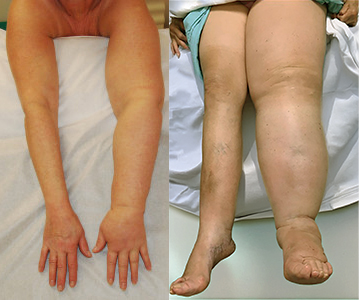
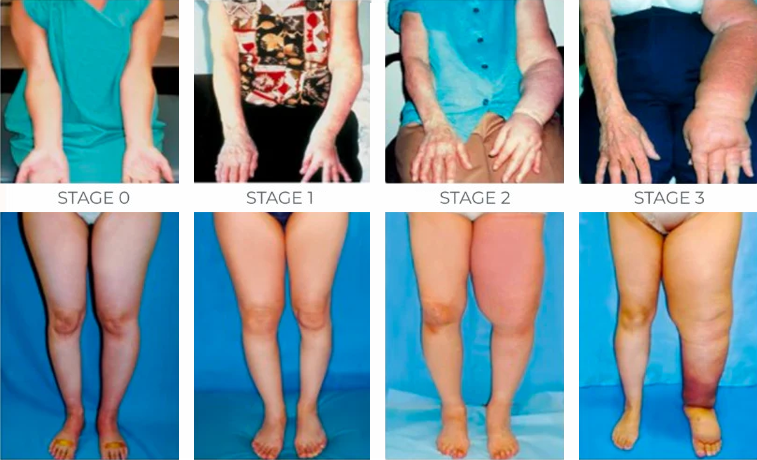
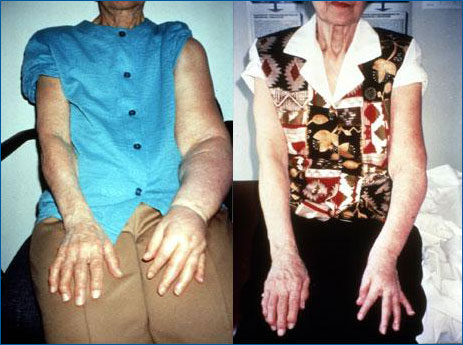
In stage I lymphedema, the swelling consists of protein-rich fluid and may become temporarily reduced by simple elevation of the limb. If it remains untreated, however, the lymphedema causes a progressive hardening of the affected tissues, which is the result of a proliferation of connective tissue, adipose tissue and scarring (stage II lymphedema). Stage III lymphedema is characterized by a tremendous increase in volume, hardening of the dermal tissues, hyperkeratosis and papillomas of the skin. Infections such as cellulitis, erysipelas or lymphangitis frequently develop in patients suffering from lymphedema. Infections are most common in stage II and III lymphedema, each infection resulting in a worsening of the condition and necessitating frequent hospitalizations. The most effective treatment for lymphedema is Manual Lymph Drainage (MLD) and Complete Decongestive Therapy (CDT).
Treatment of Lymphedema
CDT is the most successful treatment for chronic extremity lymphedema. Post mastectomy lymphedema and other related conditions respond extremely well to this gentle, non-invasive and highly effective therapy. CDT is sometimes referred to as Complete Decongestive Physiotherapy (CDP) or Complex Decongestive Physiotherapy. CDT is a combination of MLD, bandaging of the affected areas, exercises and skin and nail care.
CDT is usually divided into a two-phase program that first involves an intensive treatment phase, followed by a maintenance program that the patient continues at home. When carried out with great care, consistency and the expertise of a well-trained therapist, CDT is the treatment of choice for chronic extremity lymphedema. Even in advanced lymphedema, CDT can be used (free of side effects) with great success. Because CDT is labor intensive, time consuming and requires patient compliance, many patients have difficulty committing to the program at first. Nevertheless, because the results of CDT are superior to other available treatments, most patients undergo CDT treatment and are then able to maintain the reduction of their limbs by diligently participating in a home based self care program.

Since CDT is fairly new in the United States, staff training and treatment standards vary a great deal from clinic to clinic. It is important that the CDT training that a lymphedema therapist received consists of all components of CDT (basic and advanced MLD, lymphedema bandaging, exercises, skin and nail care). The therapist must also have a complete understanding of the anatomy, physiology and pathophysiology of the lymphatic system, the treatment of primary and secondary lymphedema, the indications and contraindications of MLD/CDT, as well as the measuring techniques for lymphedema support garments. Further, lymphedema therapy should not begin unless the patient has been examined and diagnosed by a board-certified physician who understands lymphedema and its complications. Once the diagnosis of lymphedema has been confirmed and treatment has begun, the progress must be monitored by the physician.
Whereas the clinical diagnosis of lymphedema can most often be established without invasivetesting, an electrocardiogram before the treatments begin and during the course of treatment is sometimes necessary to ensure safe treatment for each patient. Lymphangioscintigraphy (LAS), CT scans and MRIs are recommended to some lymphedema patients before they start CDT. The physician will be able to decide and inform the patient about the necessity of such procedures at the time of consultation. Because of the complications associated with lymphedema, the involvement and supervision of a qualified physician is essential in order to provide safe and effective lymphedema therapy.
MLD is a gentle manual technique, it is a potent way to activate the lymphatic system, especially when the transport capacity of the lymph system is reduced because of prior surgery and/or radiation therapy. If MLD is carried out as an isolated treatment for lymphedema, the results may be very temporary and lasting evacuation of lymph fluid from a congested (swollen) limb will not be possible. MLD alone may be used with much success in many conditions unrelated to lymphedema that are not discussed here.
Surgical procedures are sometimes suggested as a primary form of treatment to lymphedema patients. Indeed, dozens of operations have been devised and thousands have been carried out over the past century. It is safe to say that surgeries for lymphedema treatment have not been shown to give consistent, dependable or lasting results. In addition, any surgery performed on the lymphedematous (swollen) extremity may further reduce the transport capacity of the already impaired lymphatic system.
Diuretics, often prescribed, usually make the lymphedema worse. Diuretics are able to draw off the water content of the edema while the protein molecules remain in the tissue spaces. These proteins continue to draw water to the edematous areas as soon as the diuretic loses its effectiveness. These accumulated proteins also lead to a higher concentration of proteins in the edema fluid and cause the tissues to become even more fibrotic and indurated. Benzopyrones for lymphedema have been tried for many years, primarily in other countries. Their therapeutic effect as it relates to lymphedema continues to be debated. Furthermore, the product lacks FDA approval. Some patients who have used the drug here in the United States have discontinued its use after having experienced adverse side effects.
The pneumatic compression pump is a mechanical device that “milks” the lymph fluid out of the swollen extremity. The problems with pneumatic pumps are numerous and any results achieved are usually very temporary. Traditional pump therapy, for instance, disregards the fact that the ipsilateral trunk quadrant is also congested or lymphedematous. Hence, lymph fluid that is pumped into the trunk quadrant adjacent to the lymphedematous extremity will create congestion, connective and scar tissue deposition and induration (hardening) at the root of the extremity. The hip and buttock areas in lower extremity lymphedema and the shoulder, chest and back areas in upper extremity lymphedema are the areas most often congested as a result of long term pump use. This lymphedema will continue to worsen in spite of vigorous pumping. In lower extremity lymphedema, extensive pumping may cause genital lymphedema, which will not only create more physical difficulties but also immense psychological problems for the patient. In addition, pumps do nothing to eliminate scar and connective tissue (lymphatic fibrosis) which always exist in stage II and III lymphedema. In most cases, the lymphedema returns the moment the patient stops using the compression pump.
Newer pumps are designed to incorporate the trunk quadrant adjacent to the affected extremity and usually operate with less pressure than that of similar devices in the past. The newer pumps are sometimes recommended to support the self care phase of the lymphedema treatment.
Guidelines for Patients
NOTE: The following recommendations have been made by the National Lymphedema Network (NLN) for patients with lymphedema and for those who are at risk to develop lymphedema.
Skin Care – Avoid trauma or injury to reduce infection risk
Activity & Lifestyle
Avoid Limb Constriction
Compression Garments
Extremes of Temperature
Additional Practices Specific to Lower Extremity Lymphedema
NOTE: Given that there is little evidence-based literature regarding many of these practices, the majority of the recommendations must at this time be based on the knowledge of pathophysiology and decades of clinical experience by experts in the field.